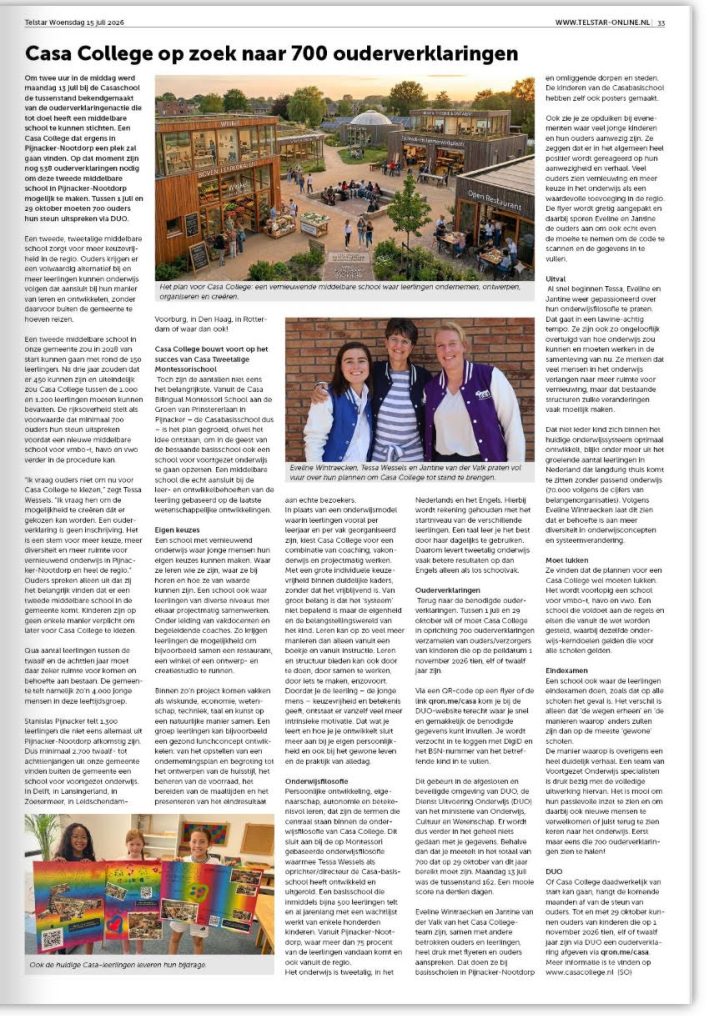
From July 1st until October 29th 2026 we'll collect parent declarations to obtain approval for the launch of Casa College.
The declarations must be submitted by parents of children aged 10, 11 of 12 jaar who live within a 15km radius of Pijnacker.
Imagine a high school that truly meets the developmental needs of students. Innovative education where adolescents can become themselves in a world that is constantly changing. A new educational concept in which personal development, ownership, autonomy and meaningful learning are central.
Learning through real responsibility, meaningful projects and active engagement in the community.
That is precisely what Casa College will be. For adolescents aged 12 to 18, we aim to establish a bilingual Montessori College in Pijnacker in 2028.
Are you someone who likes to think for yourself?
Are you curious and not always satisfied with “because that’s the way it’s done”?
Do you enjoy working on different things at the same time?
Do you want to learn not only from books, but also by making, exploring, designing, selling, and organizing?
Can you see yourself:
– starting your own project?
– building something that actually works?
– collaborating on something big?
– planning your own work and schedule?
– learning in a way that suits you?
Do you enjoy:
– freedom and responsibility?
– making your own choices?
– working together as part of a team?
– being taken seriously?
– having lots of fun while working hard?
Do you ever think:
"I could do this differently."
"Why are we learning this, anyway?"
"I want to do something that matters."
Then Casa College might be exactly the place for you!
It is ten to nine when Robin, a fourth-year student, walks into the school building. Soft morning light streams in through the large windows. The building feels open and welcoming: high ceilings, long tables, quiet workspaces, and a studio where materials are ready to be used. In the distance, activity can already be heard coming from the kitchen. The doors to the garden are wide open.
Robin heads to his core group. The day begins in a circle. The coach opens with a news item. Does anyone want to share something? One student talks about being stuck on a project, another asks for help planning the week ahead. A few spots in the circle remain empty; a group of students is working off campus today, collaborating with the local municipality on the redesign of a neighborhood square.
Then a topic comes up that has been on people’s minds for a few days: not everyone is taking their kitchen responsibilities seriously. Students respond immediately. They recognize the issue. A conversation unfolds. What exactly is happening? Where are things going wrong? What do we need to make this work better together? Ideas flow back and forth. In the end, the group decides to create a clearer division of tasks and to actively hold one another accountable. The coach guides the discussion, but the solutions come from the students themselves.
After that, the school comes alive.
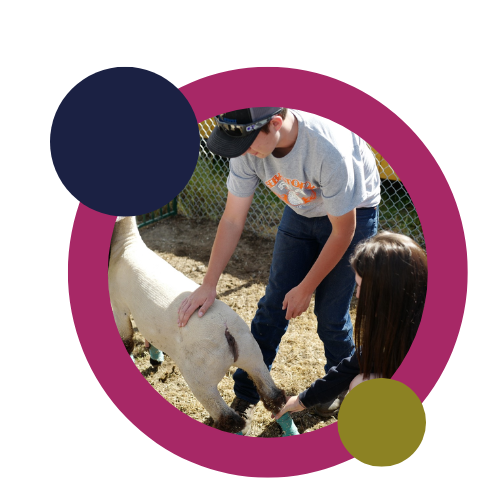
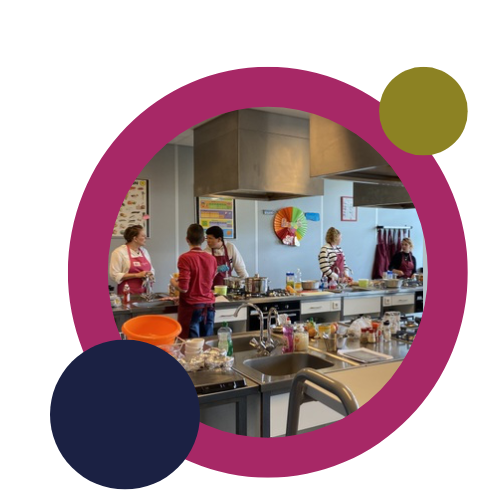
One group of students heads to the kitchen and begins preparing lunch. In the garden, others pull on their boots to care for the animals and work in the soil. In a large room, something like a lecture hall, Robin takes his seat for a mathematics lesson. On the board, a graph slowly rises upward. The teacher demonstrates how exponential growth works—how something can be barely noticeable at first and then suddenly increase rapidly. Students join in, ask questions, and work through the calculations.
Elsewhere, students sit in small groups, deeply engaged in a project. They are investigating a local challenge, developing plans, and sketching ideas. There is focused work, but also discussion and laughter.
Students move throughout the building, finding the spaces that suit what they need: quiet, conversation, or instruction. There is structure, but also freedom. Everyone is engaged.
Later in the day, Robin meets with his coach. Together they discuss his progress and determine his next steps. Afterwards, he continues working on the project with his group and coordinates who will take responsibility for what.
At the end of the day, around three o’clock, the advisory group gathers once more. Together, they reflect on and close the day.
Gradually, the room empties. Chairs are pushed back into place and coats are collected. Some students head outside into the fresh air. Others stay a little longer. Robin wants to finish his mathematics work before leaving.
Tomorrow is another day.
What if you could redesign secondary education — not improve it, but rethink it? Are you a secondary school teacher, educational designer or interested in another way? Think and build with us on the academic program development of this innovative form of secondary education!
Want to know more? Go to: For educational professionals
We are looking for people who are curious and want to contribute to better education.Co-build and co-think innovative education and join the Casa College Community.
At a later time, we will organize additional meetings for those interested in innovative education, such as our think tank and development sessions. Also for entrepreneurs who are interested to contribute as supporter or think along with our innovative educational concept.
For fifteen years, we have been successfully building our primary education at Cas Bilingual Montessori School. Together with children, parents and guides. With Casa College we want to extend the current pathway of our education for 0-12 years to 0-18 years.
Do you have a question?
With your support, Casa College can actually open. Therefore, from July 1st until October 29th 2026, we will be collecting parent declarations to demonstrate that there is sufficient support for Casa College. This is required to officially establish the school. These declarations should be from parents of children aged 10, 11, or 12 (as of November 1st 2026) who live within a 15-kilometre radius of Pijnacker, covering the area from Rotterdam to The Hague and Leiden.
For more information about how you can actively contribute, see: Casa College Community – Campaign Team
Want to stay informed of the latest news about Casa College? Sign up for our Casa College newsletter!